F2FS Format Package

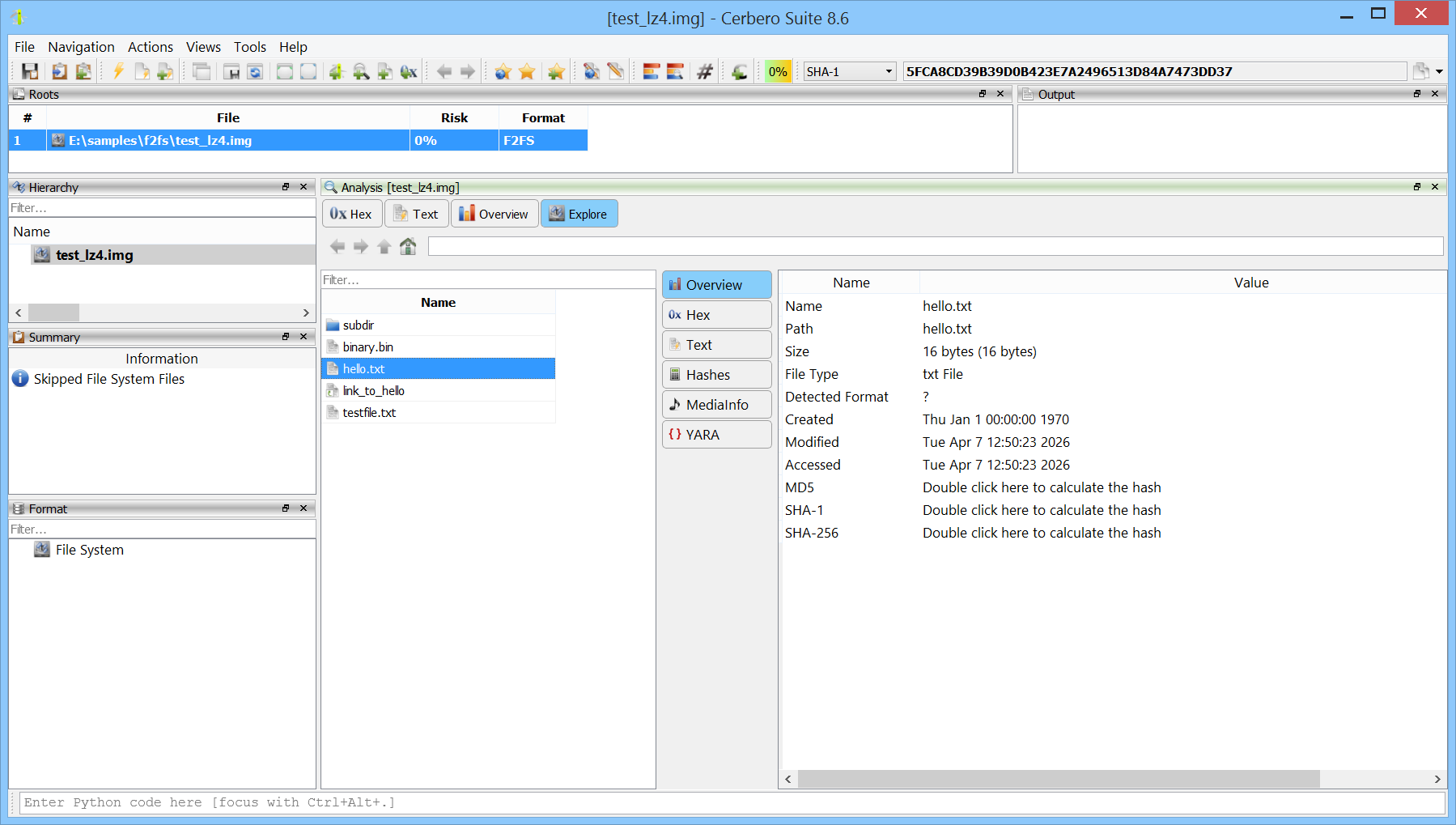
We are happy to announce support for the F2FS (Flash-Friendly File System) format. The new F2FS Format package lets you browse and extract files from F2FS images directly within the application.

F2FS is a log-structured file system designed by Samsung for NAND flash storage, merged into the Linux kernel in version 3.8. It is the default user-data file system on many Android devices and is also used on Chrome OS, Tizen, and other flash-based storage systems. F2FS employs a Node Address Table (NAT) for efficient inode resolution, multi-level hash-based directories, and supports inline data for small files, extended attributes, and transparent compression (LZO, LZ4, ZSTD). Having native support in Cerbero Suite means analysts can inspect Android user-data partitions, IoT firmware, and flash storage images encountered during security research, vulnerability assessment, or forensic investigations without needing external tools.

EROFS Format Package

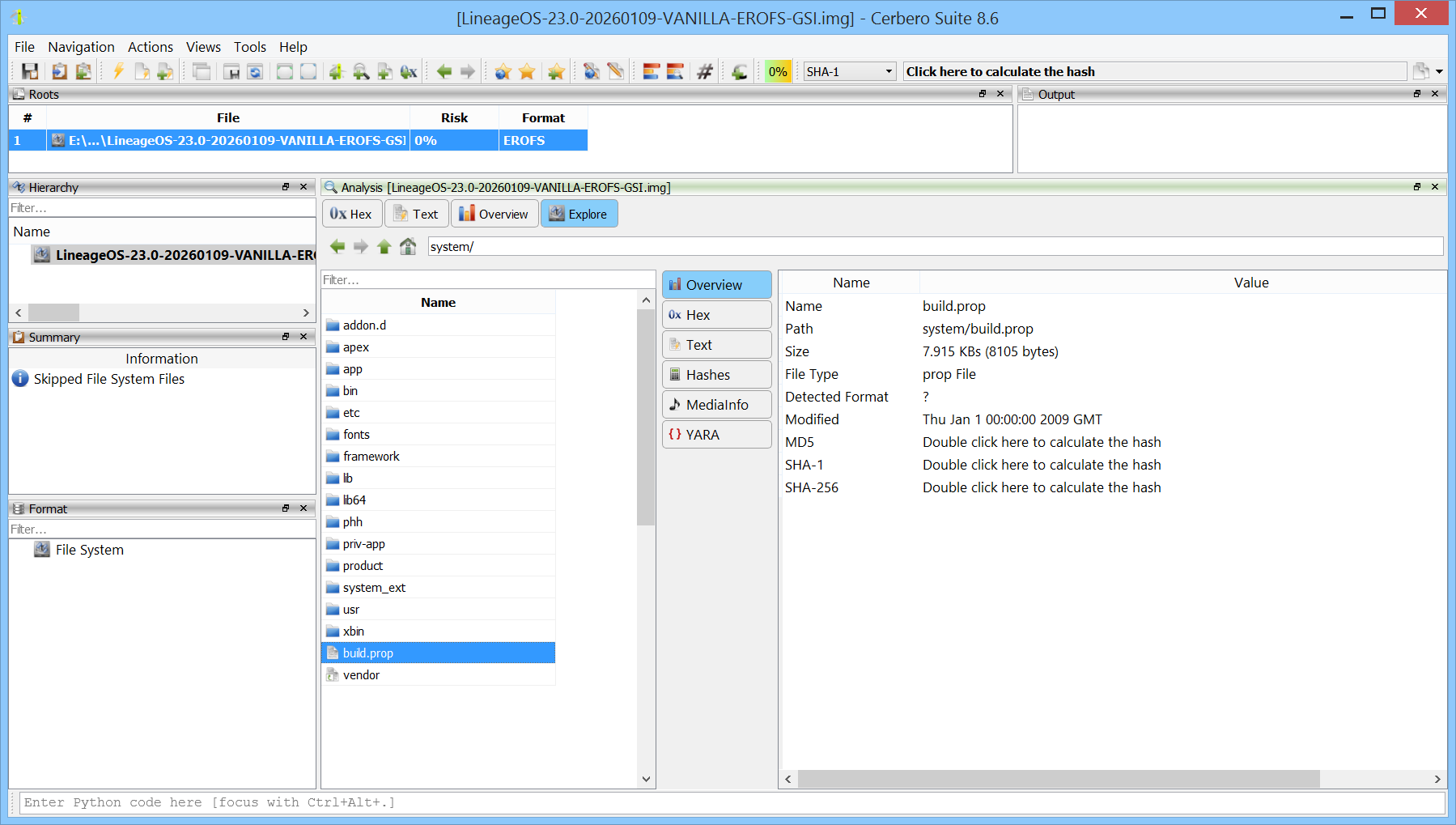
We are happy to announce support for the EROFS (Enhanced Read-Only File System) format. The new EROFS Format package lets you browse and extract files from EROFS images directly within the application.

EROFS is a high-performance, read-only compressed file system for Linux, merged into the mainline kernel in version 4.19. It was originally developed by Huawei and is now the standard file system for Android system partitions starting from Android 10. EROFS is also used in container images (Docker, Nydus) and embedded systems. Unlike older read-only file systems such as SquashFS and CRAMFS, EROFS uses a pcluster-based compressed data layout that offers efficient random read access without decompressing entire blocks. It supports multiple compression algorithms including LZ4 and DEFLATE. Having native support in Cerbero Suite means analysts can inspect Android system images, container images, and embedded firmware encountered during security research, vulnerability assessment, or forensic investigations without needing external tools.

ROMFS Format Package

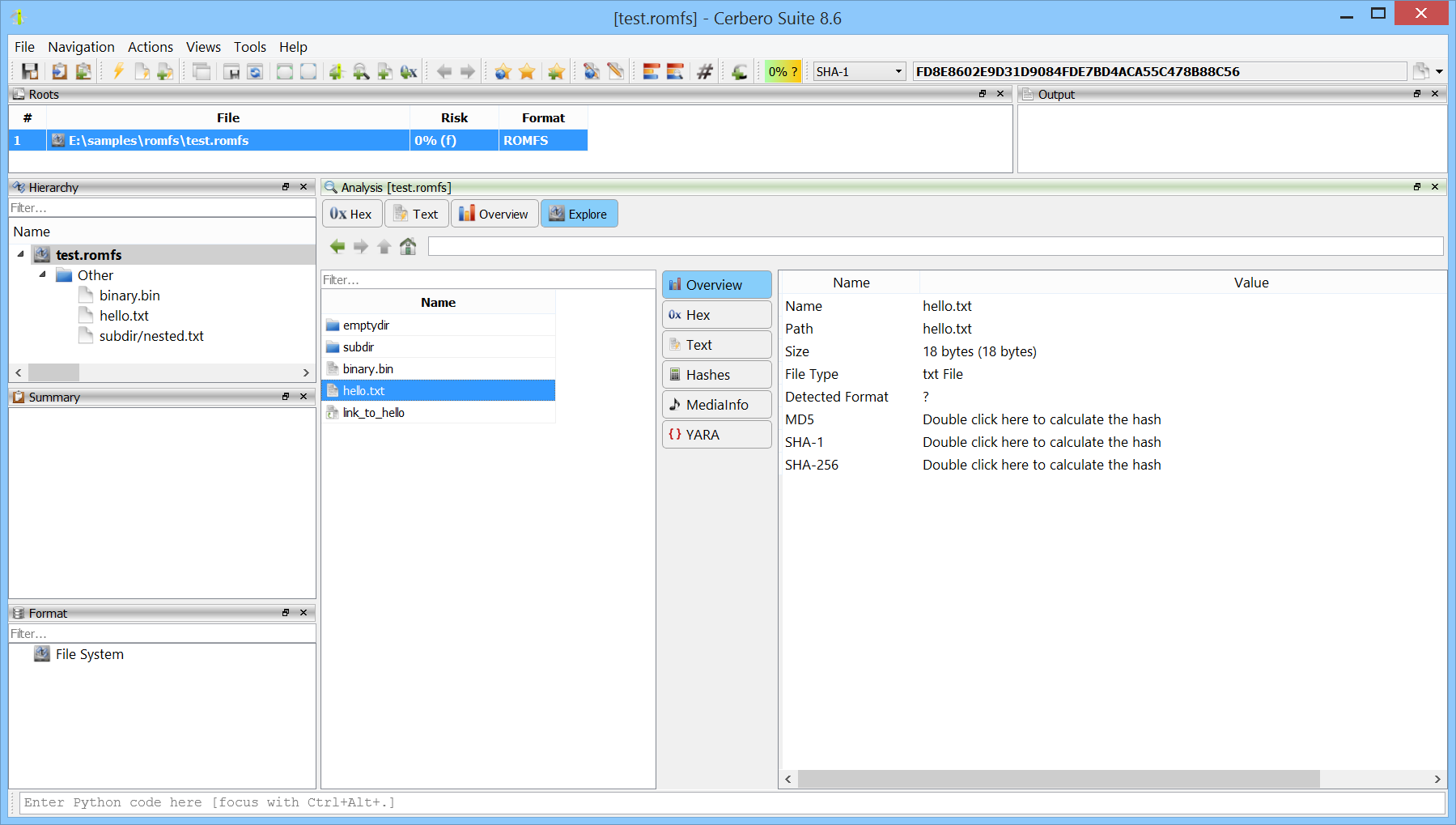
We are happy to announce support for the ROMFS (ROM File System) format in Cerbero Suite. The new ROMFS Format package lets you browse and extract files from ROMFS images directly within the application.

ROMFS is a simple, space-efficient, read-only file system designed for Linux. It was introduced in Linux 2.1.21 as a minimal alternative to ext2 for boot media and embedded devices. ROMFS stores data uncompressed with all on-disk structures in big-endian byte order, resulting in very low overhead and fast read access. ROMFS is commonly found in embedded systems, firmware images, initial RAM file systems (initramfs/initrd), and bootloaders. Its simplicity and small kernel footprint make it a popular choice for resource-constrained environments where read-only access is sufficient. Having native support in Cerbero Suite means analysts can inspect firmware dumps and ROM images encountered during security research, vulnerability assessment, or forensic investigations without needing external tools.

CRAMFS Format Package

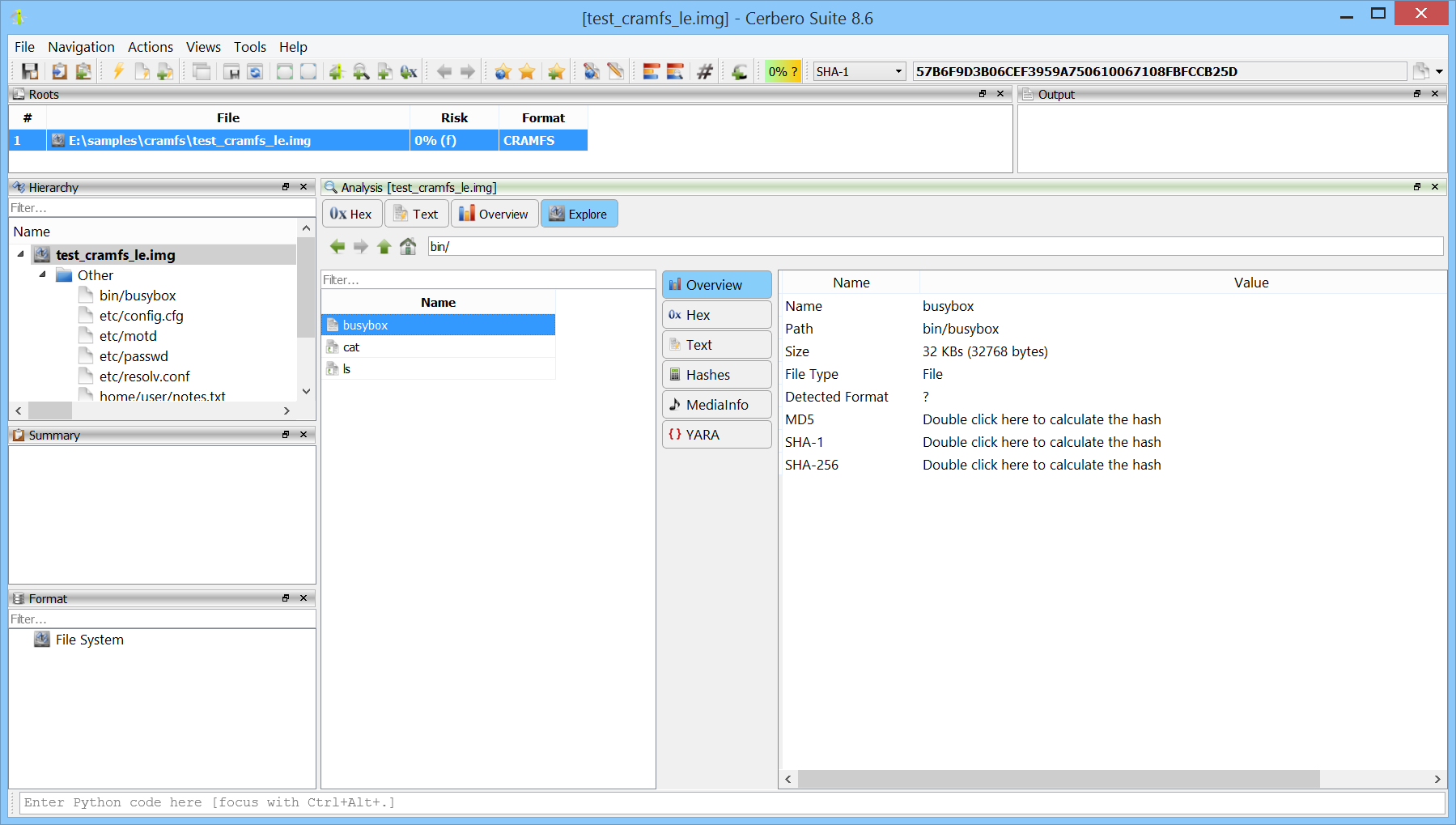
We are happy to announce support for CRAMFS file system images. The new CRAMFS Format package lets you browse and extract files from CRAMFS images directly within the application.

CRAMFS (Compressed ROM File System) is a simple, read-only compressed file system designed for Linux ROM devices. It compresses file data one page at a time using zlib, keeping the image compact while allowing random read access. CRAMFS is commonly found in embedded systems, firmware images, set-top boxes, and devices with limited flash storage. Having native support in Cerbero Suite means analysts can inspect firmware dumps and ROM images encountered during security research, vulnerability assessment, or forensic investigations without needing external tools.

SquashFS Format Package

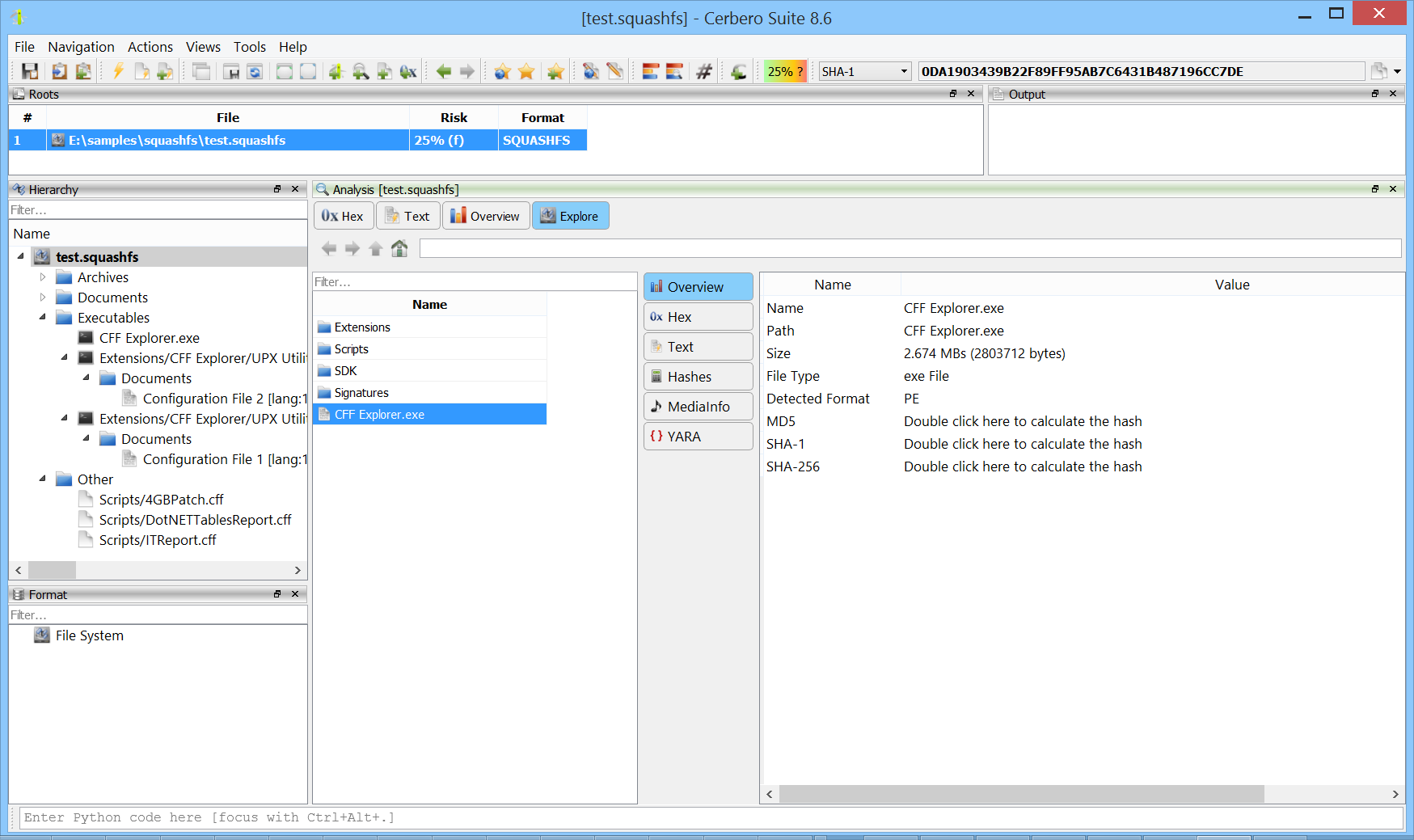
We are happy to announce support for the SquashFS file system format. The new SquashFS Format package lets you browse and extract files from SquashFS images directly within the application.

SquashFS is a compressed, read-only file system widely used in Linux distributions, embedded devices, firmware images, container technologies, and snap/AppImage application packages. It supports multiple compression algorithms and is designed for high compression ratios with fast random access. Having native support in Cerbero Suite means analysts can inspect SquashFS images encountered during firmware analysis, malware triage, or forensic investigations without needing external tools.

RPM Format Package

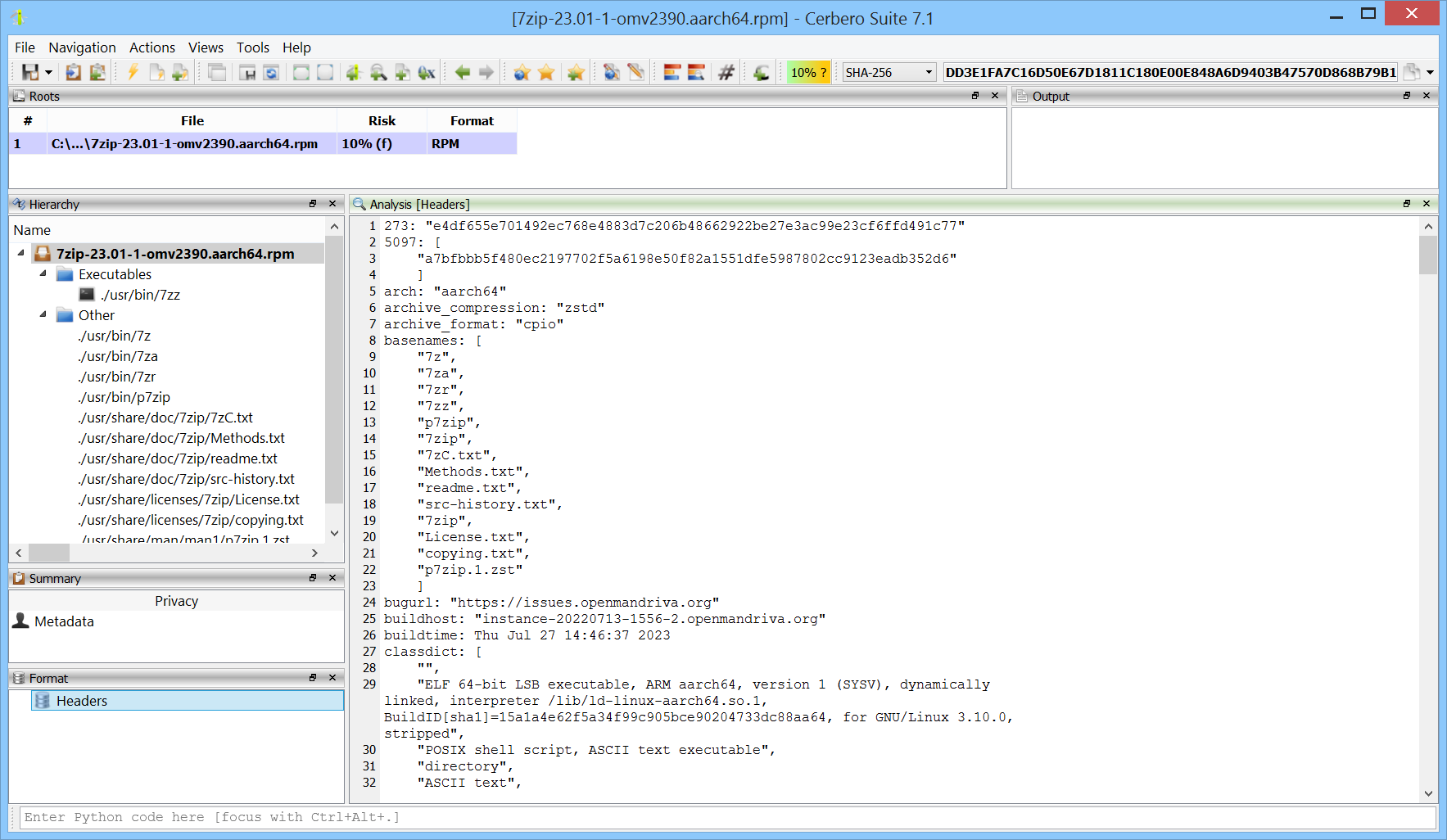
We have released the RPM Format package for all licenses of Cerbero Suite.

The RPM Package Manager (RPM) format is a package management system used primarily in Red Hat-based Linux distributions, including Fedora and CentOS. It is utilized for managing the installation, update, and removal of software on Linux systems. An RPM file contains the software itself, along with metadata about the software such as its version, dependencies, and instructions for installation. This format streamlines the process of software management, providing a standardized approach to handling packages on Linux platforms.

Continue reading “RPM Format Package”